
- For example, you could run the command atom./hopes./dreams to open both the hopes and the dreams directories at the same time. When you open Atom with one or more directories, you will automatically get a Tree View on the side of your window. The Tree View allows you to explore and modify the file and directory structure of your project.
- For example, for language HTML go into Atom-Beautify's package settings (Atom Preferences Search for atom-beautify), find HTML, and toggle the Beautify On Save option. Keyboard Shortcut You can also type Ctrl-Alt-B as a shortcut or click Packages Beautify in the menu.
An ion is an atom or group of atoms where the number of electrons is not equal to the number of protons. Electrons have a negative charge, whereas protons have a positive charge. When an atom gains electrons, this results in a negative charge. This type of ion is called an anion. When an atom loses electrons, this results in a positive charge. A positively charged ion is called a cation. Let's explore several ion examples of both types.
Examples of Positive Ions
Positive ions are typically metals or act like metals. Many common materials contain these ions. Mercury is found in thermometers, for instance, and aluminum is a metal that is found in a surprising amount of things. It's even an ingredient in baking soda and in certain other food products!
For example, H2O consists of an Oxygen atom linked to 2 Hydrogen atoms. The linkage or interaction between the electrons of the Hydrogen and Oxygen atoms is called a Chemical Bond. More on these later. Atoms in the Human Body. The human body is made up of a couple dollars worth of chemicals.
The positive charge (more protons versus electrons) for a cation is shown by a number and plus sign after the formula. If there's just a plus sign, it means the charge is plus 1. Some examples of cations, or positive ions, include the following:
- Aluminum - Al+3
- Barium - Ba+2
- Bismuth - Bi+3
- Cadmium - Cd+2
- Calcium - Ca+2
- Cesium - Cs+
- Chromium (III) - Cr+3
- Cobalt - Co+2
- Copper (I) - Cu+
- Copper (II) - Cu+2
- Hydrogen - H+
- Iron (II) - Fe+2
- Iron (III) - Fe+3
- Lead (II) - Pb+2
- Lithium - Li+
- Magnesium - Mg+2
- Mercury (I) - Hg2+2
- Mercury (II) - Hg+2
- Nickel - Ni+2
- Potassium - K+
- Rubidium - Rb+
- Silver - Ag+
- Sodium - Na+
- Strontium - Sr+2
- Tin (II) - Sn+2
- Zinc - Zn+2
Examples of Negative Ions
Just as atoms can lose electrons to become cations, some can gain electrons and become negatively charged anions. Again, you may be familiar with some of these ions. Fluoride is sometimes added to community water supplies. Your dentist may also give you a flouride treatment.
The negative charge (fewer protons than electrons) for an anion is shown by a number and minus sign after the formula. If there's just a minus sign, it means the charge is minus 1. Here are several examples of anions:
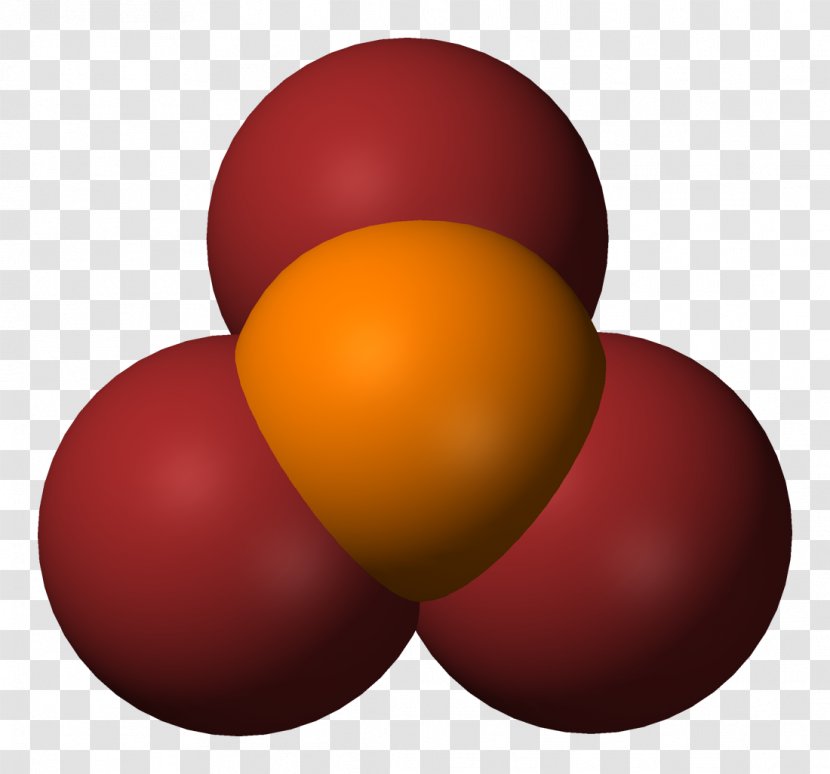
- Bromide - Br-
- Chloride - Cl-
- Fluoride - F-
- Iodide - I-
- Nitride - N3-
- Oxide - O2-
- Sulfide - S2-
Polyatomic Cations and Anions
If an ion consists of two or more atoms it is called a polyatomic ion. Just like their single-atom counterparts, they too can gain and lose electrons.
Polyatomic Cations
Ions with multiple atoms that lose electrons, and are thus positively charged, are called polyatomic cations.
- Ammonium - NH+4
- Hydronium - H3O+
Polyatomic Anions
Ions with multiple atoms that gain electrons, and are thus negatively charged, are called polyatomic anions. In the list below, the charge has been put in parentheses for ease of legibility, but standard notation calls for the charge to be written as a superscript instead.
- Acetate - CH3COO- or C2H3O2-
- Arsenate - AsO43-
- Bicarbonate or hydrogen carbonate - HCO3-
- Borate - BO33-
- Carbonate - CO32-
- Chlorate - ClO3-
- Chlorite - ClO2-
- Chromate - CrO42-
- Cyanide CN-
- Dichromate - Cr2O72-
- Dihydrogen phosphate - H2PO4- or H2O4P-
- Formate - CHO2- or HCOO- or CHOO-
- Hydrogen sulfate or bisulfate - HSO4-
- Hydrogen sulfite or bisulfite - HSO3-
- Hydrogen phosphate - HPO42-
- Hydroxide OH-
- Hypochlorite - ClO-
- Nitrate - NO3-
- Nitrite - NO2-
- Oxalate - C2O42-
- Perchlorate - ClO4-
- Permanganate - MnO4-
- Peroxide O22-
- Phosphate - PO43-
- Phosphite - PO33-
- Silicate - SiO32-
- Sulfate - SO42-
- Sulfite - SO32-
- Thiocyanate - SCN-
- Thiosulfate - S2O32-
Ionic Compounds
Atom Examples In Real Life
An ionic compound is made up of one or more anions and one or more cations.
Atom Definition Chemistry
Some examples of ionic compounds include:
- Aluminum sulfide - Al2S3
- Beryllium chloride - BeCl2
- Boron iodide - BI3
- Calcium nitride - Ca3N2
- Copper phosphide - Cu3P
- Iron (II) iodide - FeI2
- Iron (III) oxide - Fe2O3
- Lead (II) sulfide - PbS
- Lead (IV) phosphide - Pb3P4
- Lithium fluoride - LiF
- Magnesium chloride - MgCl2
- Potassium bromide - KBr
- Sodium fluoride - NaF
- Sodium nitride - Na3N

Fully Charged Reaction
Edible Atom Examples
When you study chemistry, you will encounter many examples of ions, as well as the different types of ions and how they interact and relate to each other. For more on the topic, be sure to explore some examples of chemical bonds and examples of chemical properties. Perhaps they'll be the catalyst for positive change in your learning experience!
Atom Example Sentence
Atoms in everyday life
|