
Antetype definition in English dictionary, antetype meaning, synonyms, see also 'ante',anteater',antedate',antelope'. Enrich your vocabulary with the English Definition dictionary. Typology in Christian theology and Biblical exegesis is a doctrine or theory concerning the relationship of the Old Testament to the New Testament.Events, persons, or statements in the Old Testament are seen as types pre-figuring or superseded by antitypes, events or aspects of Christ or his revelation described in the New Testament.For example, Jonah may be seen as the type of Christ in that. This is a massive update bringing the macOS version in line with the full iOS version. Now featuring 400 'Antonym Challenge' levels, 100 super-tough 'Antonyms X'.
Typology in Christian theology and Biblical exegesis is a doctrine or theory concerning the relationship of the Old Testament to the New Testament. Events, persons, or statements in the Old Testament are seen as types pre-figuring or superseded by antitypes, events or aspects of Christ or his revelation described in the New Testament. For example, Jonah may be seen as the type of Christ in that he emerged from the fish's belly and thus appeared to rise from death.
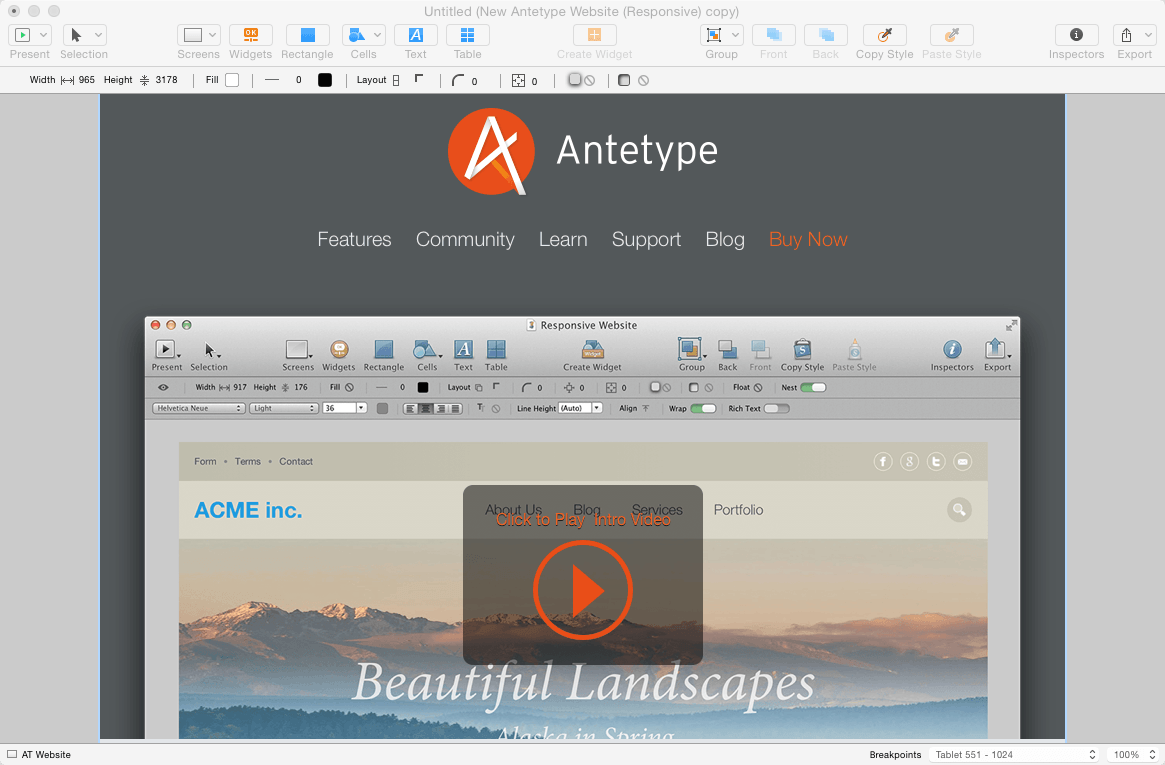
ANTETYPE is a software which basically gives the Customer new possibilities for designing user interfaces and supports him in each step when creating user interfaces using practical tools. ANTETYPE facilitates the design of dynamic layouts and widgets and enables the creation of.
Antitype Of Jesus
In the fullest version of the theory of typology, the whole purpose of the Old Testament is viewed as merely the provision of types for Christ, the antitype or fulfillment. The theory began in the Early Church, was at its most influential in the High Middle Ages, and continued to be popular, especially in Calvinism, after the Protestant Reformation, but in subsequent periods has been given less emphasis.[1] In 19th century German protestantism, typological interpretation was distinguished from rectilinear interpretation[clarification needed] of prophecy. The former was associated with Hegelian theologians and the latter with Kantian analyticity. Several groups favoring typology today include the Christian Brethren beginning in the 19th century, where typology was much favoured and the subject of numerous books and the Wisconsin Evangelical Lutheran Synod.
Notably, in the Eastern Orthodox Church, typology is still a common and frequent exegetical tool, mainly due to that church's great emphasis on continuity in doctrinal presentation through all historical periods. Typology was frequently used in early Christian art, where type and antitype would be depicted in contrasting positions.
The usage of the terminology has expanded into the secular sphere; for example, 'Geoffrey de Montbray (d.1093), Bishop of Coutances, a right-hand man of William the Conqueror, was a type of the great feudal prelate, warrior and administrator'.[2]
Etymology[edit]
The term is derived from the Greek noun τύπος (typos), 'a blow, hitting, stamp', and thus the figure or impression made on a coin by such action; that is, an image, figure, or statue of a man; also an original pattern, model, or mould. To this is prefixed the Greek preposition ἀντί anti, meaning opposite, corresponding.[3][4]
Origin of the theory[edit]
Christian typology begins in the New Testament itself. For example, Paul in Romans 5.14 calls Adam 'a type [τύπος] of the one who was to come' — i.e., a type of Christ. He contrasts Adam and Christ both in Romans 5 and in 1 Corinthians 15. The author of the First Epistle of Peter uses the term ἀντίτυπον (antitypon) to refer to baptism.[5] There are also typological concepts in pre-Pauline strata of the New Testament.[6]
The early Christians, in considering the Old Testament, needed to decide what its role and purpose was for them, given that Christian revelation and the New Covenant might be considered to have superseded it, and many specific Old Testament rules and requirements were no longer being followed from books such as Leviticus dealing with Expounding of the Law.[7] One purpose of the Old Testament for Christians was to demonstrate that the Ministry of Jesus and Christ's first coming had been prophesied and foreseen, and the Gospels indeed contain many Old Testament prophecies fulfilled by Christ and quotations from the Old Testament which explicitly and implicitly link Jesus to Old Testament prophecies. Typology greatly extended the number of these links by adding others based on the similarity of Old Testament actions or situations to an aspect of Christ.
Typology is also a theory of history, seeing the whole story of the Jewish and Christian peoples as shaped by God, with events within the story acting as symbols for later events. In this role, God is often compared to a writer, using actual events instead of fiction to shape his narrative.[8] The most famous form of this is the three-fold Hegelian dialectic pattern, although it is also used in other applications besides history.
Development of typology[edit]
The system of Medieval allegory began in the Early Church as a method for synthesizing the seeming discontinuities between the Hebrew Bible (Old Testament) and the New Testament. The Church studied both testaments and saw each as equally inspired by God, yet the Old Testament contained discontinuities for Christians such as the Jewish kosher laws and the requirement for male circumcision. This therefore encouraged seeing at least parts of the Old Testament not as a literal account but as an allegory or foreshadowing of the events of the New Testament, and in particular examining how the events of the Old Testament related to the events of Christ's life. Most theorists believed in the literal truth of the Old Testament accounts, but regarded the events described as shaped by God to provide types foreshadowing Christ. Others regarded some parts of the Bible as essentially allegorical; however, the typological relationships remained the same whichever view was taken. Paul states the doctrine in Colossians 2:16–17 – 'Therefore do not let anyone judge you by what you eat or drink, or with regard to a religious festival, a New Moon celebration or a sabbath day. These are a shadow of the things that were to come; the reality, however, is found in Christ.' The idea also finds expression in the Letter to the Hebrews.
The development of this systematic view of the Hebrew Bible was influenced by the thought of the Hellenistic Jewish world centered in Alexandria, where Jewish philosopher Philo (c. 20 BC – c. 50 AD) and others viewed Scripture in philosophical terms (contemporary Greek literary theory highlighted foreshadowing as a literary device) as essentially an allegory, using Hellenistic Platonic concepts. Origen (184/185 – 253/254) Christianised the system, and figures including Hilary of Poitiers (c. 300 – c. 368) and Ambrose (c. 340 – 397) spread it. Saint Augustine (345–430) recalled often hearing Ambrose say that 'the letter kills but the spirit gives life', and Augustine in turn became a hugely influential proponent of the system, though also insisting on the literal historical truth of the Bible. Isidore of Seville (c. 560–636) and Rabanus Maurus (c. 780–856) became influential as summarizers and compilers of works setting out standardized interpretations of correspondences and their meanings.[9]
Jewish typological thought continued to develop in Rabbinic literature, including the Kabbalah, with concepts such as the Pardes, the four approaches to a Biblical text.
Typology frequently emerged in art; many typological pairings appear in sculpture on cathedrals and churches and in other media. Popular illustrated works expounding typological couplings were among the commonest books of the late Middle Ages, as illuminated manuscripts, blockbooks, and incunabula (early printed books). The Speculum Humanae Salvationis and the Biblia pauperum became the two most successful compilations.
Example of Jonah[edit]
The story of Jonah and the fish in the Old Testament offers an example of typology. In the Old Testament Book of Jonah, Jonah told his shipmates to throw him overboard, explaining that God's wrath would pass if Jonah were sacrificed, and that the sea would become calm. Jonah then spent three days and three nights in the belly of a great fish before it spat him up onto dry land.
Typological interpretation of this story holds that it prefigures Christ's burial and resurrection. The stomach of the fish represented Christ's tomb; as Jonah exited from the fish after three days and three nights, so did Christ rise from His tomb on the third day. In the New Testament, Jesus invokes Jonah in the manner of a type: 'As the crowds increased, Jesus said, 'This is a wicked generation. It asks for a miraculous sign, but none will be given it except the sign of Jonah.' Luke 11:29–32 (see also Matthew 12:38–42, 16:1–4). In Jonah 2, Jonah called the belly of the fish 'She'ol', the land of the dead (translated as 'the grave' in the NIV Bible).

Thus, when one finds an allusion to Jonah in Medieval art or in Medieval literature, it usually represents an allegory for the burial and resurrection of Christ. Other common typological allegories entail the four major Old Testament prophets Isaiah, Jeremiah, Ezekiel, and Daniel prefiguring the four Evangelists Matthew, Mark, Luke, and John, or the twelve tribes of Israel foreshadowing the twelve apostles. Commentators could find countless numbers of analogies between stories of the Old Testament and the New; modern typologists prefer to limit themselves to considering typological relationships that they find sanctioned in the New Testament itself, as in the example of Jonah above.[10]
Other Old Testament examples[edit]
Offering of Isaac[edit]
Genesis Chapter 22 brings us the story of the preempted offering of Isaac. God asks Abraham to offer his son Isaac to Him, cited as foreshadowing the crucifixion of Jesus. Isaac asks his father, “Where is the lamb for the burnt offering”, and Abraham prophesies, 'God himself will provide the lamb for the burnt offering, my son.' And indeed, a ram caught by its horns awaits them, which is also seen as a type for Christ, the lamb that God provides for sacrifice, crowned by thorns.
Joseph[edit]
Genesis Chapters 37–50 has the story of Joseph in Egypt, and Joseph is commonly cited as a Christ type.[12] Joseph is a very special son to his father. From his father’s perspective, Joseph dies and then comes back to life as the ruler of Egypt. Joseph’s brothers deceive their father by dipping his coat in the blood of a sacrificed goat (Genesis 37:31). Later, Joseph’s father finds that Joseph is alive and is the ruler of Egypt who saves the world from a great famine. Other parallels between Joseph and Jesus include:

- both are rejected by their own people
- both became servants
- both are betrayed for silver
- both are falsely accused and face false witnesses
- both attain stations at the 'right hand' of the respective thrones (Joseph at Pharaoh's throne and Christ at the throne of God)
- Joseph was 30 years old when he stood before Pharaoh, and Jesus was about the same age according to the bible when he began his ministry
- Money and goods were not able to save the people in time of famine, they had to sell themselves, the same notions are discussed throughout the New Testament.
- both provided for the salvation of gentiles, (Joseph provided a physical salvation in preparing for the famine, while Christ provided the deeper spiritual salvation)
- Joseph married an Egyptian wife, bringing her into the Abrahamic lineage; Christ's relationship with the church is also described in marriage terms in the New Testament
- A direct parallel with Joseph ruling over all of Egypt, and that only Pharaoh would be greater in the throne (Genesis 41:40) is repeated in 1 Corinthians 15:27 with regards to Jesus
- Both suffered greatly, and through patience and humbleness were exalted greatly by God, who gave in abundance all things over time.
Moses[edit]
Moses, like Joseph and Jonah, undergoes a symbolic death and resurrection. Moses is placed in a basket and floated down the Nile river, and then is drawn out of the Nile to be adopted as a prince (floating the body down the Nile river was also part of an Egyptian funerary ritual for royalty).[13]
While in the wilderness, Moses put a brazen serpent on a pole which would heal anyone bitten by a snake, provided that the person looked at it (Numbers 21:8). Jesus proclaimed that the serpent was a type of Himself: 'as Moses lifted up the serpent in the wilderness, even so must the Son of man be lifted up' (John 3:14).
In a battle with the Amalekites, Exodus 17:11 states that 'as long as Moses held up his hands, the Israelites were winning, but whenever he lowered his hands, the Amalekites were winning.' Commentators[citation needed] interpret Moses' raised hands as a type of Jesus' raised hands upon the Cross for, when Jesus' hands were raised as He died, a figurative battle was waged with sin, the end result being victory – that 'all will be made alive' (1 Cor. 15:22).
Inanimate types[edit]
Other types were found in aspects of the Old Testament less tied to specific events. The Jewish holidays also have typological fulfillment in the life of Christ. The Last Supper was a Passover meal. Furthermore, many people[citation needed] see the Spring Feasts as types of what Christ accomplished in his first advent and the Fall Feasts as types of what Christ will accomplish in his second advent.
The Jewish Tabernacle is commonly seen as a series of complex types of Jesus Christ. For example, Jesus describes himself as 'the door'[14] and the only 'way' to God,[15] represented in the single, wide gate to the tabernacle court; the various layers of coverings over the tabernacle represent Christ's godliness (in the intricately woven inner covering) and his humanity (in the dull colouring of the outside covering).[16] The Showbread prepared in the Temple of Jerusalem is also seen as a type for Christ.[citation needed]
Post-biblical usage[edit]

As Erich Auerbach points out in his essay 'Figura', typological (figural) interpretation co-existed alongside allegorical and symbolic-mythical forms of interpretation.[17] But it was typology that was most influential as Christianity spread in late Mediterranean cultures, as well as in the North and Western European cultures.[18] Auerbach notes that it was the predominant method of understanding the Hebrew scriptures until after the Reformation—that is, that the Hebrew texts were not understood as Jewish history and law but were instead interpreted 'as figura rerum or phenomenal prophecy, as a prefiguration of Christ'.[19] Typological interpretation was a key element of Medieval realism, but remained important in Europe 'up to the eighteenth century'.[20]
Further, typology was extended beyond interpretations of the Hebrew scriptures and applied to post-Biblical events, seeing them as 'not the ultimate fulfillment, but [...] a promise of the end of time and the true kingdom of God.'[21] Thus, the Puritans interpreted their own history typologically:[22]
Applied more liberally and figured more broadly, typology expanded into a more elaborate verbal system that enabled an interpreter to discover biblical forecasts of current events. Thus, the Atlantic journey of the Puritans could be an antitype of the Exodus of the Israelites; and the New England colony, a New Zion, to which Christ may return to usher in the Millennium. The first settlers were conservative, cautious typologists, but as Edward Johnson's Wonder-Working Providence of Sion's Saviour in New England (1654; composed c. 1650) demonstrates, by the 1640s New England's sacred errand into the wilderness and the approaching Apocalypse were accepted antitypes of sacred history.[23]
In this way, the Puritans applied typology both to themselves as a group and to the progress of the individual souls:
Applied more broadly, typology enabled Puritans to read biblical types as forecasting not just the events of the New Testament but also their own historical situation and experiences. In this way, individual Puritans could make sense of their own spiritual struggles and achievements by identifying with biblical personages like Adam, Noah, or Job. But this broad understanding of typology was not restricted to individual typing; the Puritans also interpreted their group identity as the fulfillment of Old Testament prophecy, identifying their community as the 'New Israel.'[24]
Typology also became important as a literary device, in which both historical and literary characters become prefigurations of later historical or literary characters.[25]
Intrinsic vs. extrinsic typology[edit]
Exegetical professor Georg Stöckhardt[26] separated Biblical typology into two categories. Extrinsic or external typology was separate from the meaning of the text and its original meaning. Rather, it is applied to the topic by the reader. Intrinsic or internal typology referred to typology embedded within the meaning of the text itself. Although he rejected the possibility of the latter because it would violate the doctrine of the clarity of scripture,[27] most typologists either do not make this distinction or do not reject typology internal to the text. Stöckhardt's position against intrinsic typology is related to the position that all Messianic prophecies are rectilinear as opposed to typological.[28]
Antitype Synonym
Typology and narrative criticism[edit]
Antitype Meaning
Typology is also used by narrative critics to describe the type of time in which an event or happening takes place. Mark Allan Powell separates chronological time from typological time.[29] Whereas chronological time refers to the time of action, typological time refers to the “kind of time” of an action. Typological settings may be symbolic.
See also[edit]
- Correspondence (theology) – typology of Emanuel Swedenborg.
- Peter Leithart – typologist
- Parallelomania, concerning the overuse of typology
References[edit]
- ^A Study of Biblical Typology (Wayne Jackson, Christian Courier)
- ^Encyclopædia Britannica
- ^Liddell and Scott's Greek-English Lexicon, Oxford 1871.
- ^The Latin figura, meaning form, shape, or figure, may be comparable, but is from the less violent verb fingo, finxi, fictum, to fashion, form, or mould (Cassell's Latin Dictionary)
- ^1 Peter 3:21
- ^E. Earle Ellis, 1957, Paul’s Use of the Old Testament. Edinburgh; London: Oliver and Boyd.
- ^See also Leviticus 18
- ^Typology Washington State University
- ^Emile Male, The Gothic Image, Religious Art in France of the Thirteenth Century, p 131-9, English translation of 3rd edition, 1913, Collins, London, ISBN978-0064300322 (and many other editions)
- ^Jackson, see above
- ^for example Hebrews 8:6
- ^Learn the bible site
- ^Burial customs [1][2].
- ^John 10:9
- ^John14:6
- ^CH Raven, God's Sanctuary, John Ritchie Ltd., 1991, ISBN978-0-946351-31-2
- ^Auerbach, Erich. 'Figura'. pp.54–57.
- ^Auerbach p.58
- ^Auerbach p.53
- ^Auerbach p.61
- ^Auerbach p.58.
- ^See for instance, Sacvan Bercovitch, Typology and Early American Literature, U Mass Press, 1972.
- ^Emory Elliott, 'New England Puritan Literature' p.188 at Donna Campbell's American Literature site at WSU
- ^American Passages Unit 3 Glossary
- ^Auerbach's essay treats of figuration in Dante. For a collection of essays on this topic, see Earl Miner, Literary Uses of Typology from the Late Middle Ages to the Present, Princeton U Press, 1977. Of especial interest in this volume are Robert Hollander's essay 'Typology and Secular Literature: Some Medieval Problems and Examples' (pp.3–19) and Barbara Kiefer Lewalski's 'Typological Symbolism and the 'Progress of the Soul' in Seventeenth-Century Literature' (pp.79–114).
- ^Stöckhardt in the Christian Cyclopedia
- ^Goerss, William Elmer (1964). Some of the hermeneutical presuppositions and part of the exegetical methodology of Georg Stoeckhardt. Concordia Seminary: Unpublished dissertation. OCLC4816986.
- ^For more on rectilinear as opposed to typological prophecy, see Surburg, Raymond F. (December 1980). 'The Proper Interpretation to Old Testament Messianic Prophecy'(PDF). The Lutheran Synod Quarterly. BLTS. Retrieved 4 February 2019.
- ^Mark Allan Powell, What is Narrative Criticism? (Minneapolis, MN: Fortress Press, 1990), 72-4.
Bibliography[edit]
- Fairbairn, Patrick. The Typology of Scripture. Edinburgh: T. & T. Clark, 1847.
- Goppelt, Leonhardt. Typos: The Typology Interpretation of the Old Testament in the New. Grand Rapids: Eerdmans, 1982.
- Martens, Peter. 'Revisiting the Allegory/Typology Distinction: The Case of Origen.' Journal of Early Christian Studies 16 (2008): 283–317.
External links[edit]
- Online bookPatrick FairbairnThe Typology of Scripture, 1859
- Puritan typology, Donna M. Campbell, Washington State University
- Nicholas Lunn, 'Allusions to the Joseph Narrative in the Synoptic Gospels and Acts' (2012) [3]
Last updated 5 June 2020
- General
- The below contract provisions (GTCs) are applicable for all contracts concluded via the internet site www.antetype.com (hereinafter: “antetype.com”), an ERGOSIGN internet site (hereinafter: “ERGOSIGN”) or via in-app purchase of the Antetype software between natural and legal persons, who licence Antetype software (hereinafter: “Customers”), and ERGOSIGN.
- Deviating general terms and conditions of the Customer are not recognised by ERGOSIGN, unless ERGOSIGN had expressly consented to these in writing.
- Conclusion of contract
- 2.1 ERGOSIGN offers the licencing of ANTETYPE software (hereinafter: ANTETYPE) on antetype.com or via in-app purchase.
- After pressing the “Buy Now” button, the Customer will be brought, within the order process, to the domain www.paddle.com of the company, 15 Briery Close, Great Oakley, Corby, Northamptonshire, NN18 8JG, United Kingdom (hereinafter: Paddle).
- The item descriptions on antetype.com represent an unbinding invitation for the Customers to order. The Customer makes a binding offer to conclude the contract by ordering.
- The Customer can input the required number of ANTETYPE licences during the order process in the corresponding field and can thus purchase the desired quantity of ANTETYPE licences after he has entered his delivery information in a form and selected the payment method by clicking on the “Pay Now” button. In the case of ordering by means of clicking on the “Pay Now” button, the Customer makes a binding order regarding the selected number of licences. The receipt of the order is then confirmed by email.
- ERGOSIGN has the right to accept the contractual offer from the Customer within five working days following receipt of the order. The contract, however, is concluded at the latest when the selected number of ANTETYPE licences has been delivered.
- The purchase agreement is concluded with: ERGOSIGN Technologies GmbH, Europa-Allee 20a, 66113 Saarbrücken, Germany.
- The contract language is English.
- Contract text storage
- 3.1 The contract information will be stored by ERGOSIGN. The order data will be sent to the Customer separately in text form (email).
- These GTCs can also be accessed and printed via the internet site www.antetype.com.
- Right to cancel
- Consumers fundamentally have a statutory right to cancel. The legal regulations regarding a possible existing right to cancel are exclusively contained in the cancellation instructions, which are available to the CUSTOMERS as part of the order process.
- Termination of the right to cancel
- The right to cancel of a consumer is terminated in the case of contracts regarding the delivery of digital content not located on a physical data carrier according to § 356 Section 5 BGB [German Civil Code], if the entrepreneur has commenced the execution of the contract after the consumer has expressly consented to the entrepreneur commencing the execution of the contract prior to the expiry of the cancellation deadline and has confirmed that he is aware that he loses his right to cancel by consenting to the commencement of the execution of the contract.
- Delivery date
- The delivery takes place through an email to the delivery email address indicated in the order form, which email contains a link to download ANTETYPE (hereinafter: Download Link).
- The delivery time will be indicated separately for the respective item or by the product description on the item page.
- The delivery time indicated on the item page commences on the working day following the day of the conclusion of the contract.
- In the case of purchasing rights of use through an ANTETYPE licence, ERGOSIGN also makes a software licence key available to the Customer for activating ANTETYPE.
- The installation of ANTETYPE by ERGOSIGN is not subject matter of the contract.
- In the case of delays to deliveries, ERGOSIGN will immediately inform the CUSTOMERS.
- Payment and invoicing
- The prices valid on the day of the order are applicable, as they are displayed in the online shop. The indicated end prices are applicable in each case plus statutory VAT.
- In individual cases, further taxes for international deliveries (e.g. in the case of an intra-Community purchase) and/or charges (e.g. duties) must be paid by the Customer.
- ERGOSIGN only accepts the payment methods offered during the order process on the domain of Paddle. The Customer independently selects his preferred payment method from the payment methods available.
- If a delivery is carried out with payment by credit card, the Customer authorises the charging of the full invoice amount including any delivery and shipping costs when due via the credit card company concerned by disclosing his credit card data. The charging will take place in this case with the order confirmation.
- If a payment takes place via PayPal, the Customer must have a PayPal account and authenticate himself using his access data. The Customer must thus go through the PayPal payment process and confirm the payment to Paddle.
- If a payment takes place via Apple Pay, the Customer must have an Apple Pay account and authenticate himself using his access data. The Customer must thus go through the Apple Pay payment process and confirm the payment to Paddle.
- If a payment takes place via Amazon Payments, the Customer must have an Amazon account and authenticate himself using his Amazon access data, go through the Amazon payment process and confirm the payment to FastSpring. Amazon accepts bank debits and credit card as payment methods:
- • In the case of payment by credit card, the Customer authorises Amazon to charge the full invoice amount including any delivery and shipping costs when due via the credit card company concerned by disclosing his credit card data. The charging will take place in this case with the order confirmation.
- • In the case of payment by bank debit, the Customer discloses to Amazon his IBAN and BIC numbers. Amazon debits the invoice amount according to the invoice from the indicated account of the CUSTOMER. In the case of a debit return, the Customer must bear the costs of this debit return. The Customer is reserved the right to furnish proof that no or only a reduced loss is caused by the debit return.
- Invoicing takes place electronically according to the statutory provisions under § 14 Section 3 UStG [German Turnover Tax Act].
- Rights of setoff are only available to CUSTOMERS if the counter claims are legally established, undisputed or recognised by ERGOSIGN. For exercising a right of retention – even due to complaints – the CUSTOMER is only authorised if his counter claim is based on the same contractual relationship.
- Reservation of title
- 7.1 Up to complete payment, ERGOSIGN retains the ownership and all further rights to ANTETYPE. ERGOSIGN is, in particular, entitled to prohibit the Customer the further use of ANTETYPE and to request the surrendering of all copies or – insofar as surrendering is not possible – the deletion thereof if the Customer has not fulfilled his payment obligations or otherwise behaves in a manner contrary to the contract.
- If a third party accesses ANTETYPE prior to complete payment of the licence, the Customer is obliged to inform this third party regarding the reservation of title of ERGOSIGN and to notify the seller immediately by email regarding the access of the third party.
- Liability for material and statutory defects/Warranty
- Rights in the case of defects of ANTETYPE are determined according to the statutory provisions.
- If the Customer is not acting as a consumer, obvious defects must be presented to ERGOSIGN within a period of two weeks from receipt of ANTETYPE, otherwise the assertion of a warranty claim is ruled out. In order to respect the deadline, timely sending of the notice of defects is sufficient by email, fax or in written form.
- A material defect is present if ANTETYPE is not fit for the use described in the documentation. The documentation can be retrieved on antetpye.com.
- A statutory defect is present if the rights required for the contractually provided use are not granted as effective by ERGOSIGN following the delivery of ANTETYPE.
- Claims due to material and/or statutory defects against ANTETYPE regularly lapses in two years. Insofar as the Customer is not a consumer in the context of § 13 BGB, these claims lapse in one year.
- The limitation period commences with the receipt of the licence key required to activate ANTETYPE.
- The Customer is obliged to report emerging defects immediately following discovery thereof to ERGOSIGN, providing the specific defect characteristics.
- If defects are reported to ERGOSIGN, the latter can choose to rectify or redeliver.
- ERGOSIGN will either provide the Customer with a corrected complete version of ANTETYPE or with a program to remove the defect (update) via a download. A specific defect analysis and removal on the system of the Customer is not owed by ERGOSIGN.
- Even in the context of rectification, the Customer is himself responsible for the installation of ANTETYPE.
- The duty of guarantee is not applicable if the Customer makes changes to ANTETYPE without express written approval from ERGOSIGN or if the defect characteristics emerge in a software environment different to that specified, unless the Customer proves that these facts have no connection with the defect.
- ERGOSIGN guarantees that the contractual use of ANTETYPE by the Customers does not conflict with the rights of third parties.
- Rights of use /Licence conditions
- ANTETYPE is a software which basically gives the Customer new possibilities for designing user interfaces and supports him in each step when creating user interfaces using practical tools. ANTETYPE facilitates the design of dynamic layouts and widgets and enables the creation of interactive software prototypes.
- ERGOSIGN ensures the Customer a right of use of ANTETYPE when an ANTETYPE licence is purchased according to the following conditions:
- Scope of licence
- ERGOSIGN ensures the Customer, in the context of this licence, a simple, non-transferable, non-exclusive, local and time-limited right of use to the version of ANTETYPE, which is current at the time of the licencing, for private or commercial purposes. ERGOSIGN will provide the Customer with a licence file following the conclusion of the contract.
- The right of use comprises the activation for three times (hereinafter: Activations) and the use of updates for the respectively licenced full versions of ANTETYPE for one year from the purchase date on (hereinafter: Update Period).
- ERGOSIGN has the right to technically monitor the maximum permitted number of 3 activations per licence by verifying the licence key used in the context of an online activation.
- ERGOSIGN has the right to technically monitor the if the CUSTOMER is eligible for updates, i.e. for one year after purchase.
- If the Update Period has expired, ANTETYPE can still be used without any linitis, except that updates via the in-app update or are via download of newer versions is no longer possible.
- A trial installation of ANTETYPE is possible for a period of 30 days. The save functionality of ANTETYPE is automatically deactivated following expiry of this period if no valid licence file key been activated by this time. A re-activation is possible at any time by incorporating a valid licence key.
- ERGOSIGN ensures the Customer, in the context of this licence, a simple, non-transferable, non-exclusive, local and time-limited right of use to the version of ANTETYPE, which is current at the time of the licencing, for private or commercial purposes. ERGOSIGN will provide the Customer with a licence file following the conclusion of the contract.
- Copyrights – intellectual property
- ERGOSIGN reserves all rights to ANTETYPE. ANTETYPE contains code which has been created by third parties and which may be distributed under different licences (e.g.). All rights to this code are held by the respective author. ANTETYPE has been programmed using the following listed tools:
- Code which is not explicitly identified and named in the documentation of ANTETYPE is the sole copyright of ERGOSIGN and is protected by copyright laws, international contracts or other national laws. The Customer receives no further rights to ANTETYPE beyond those indicated in point 9 through the licencing and use of ANTETYPE. The term, “ANTETYPE” is trademark protected in Germany, the European Union Member States, the USA and Switzerland.
- The Customer does not have the right to rent or lease, to share with third parties, or to distribute or publish in any form, versions of ERGOSIGN. The Customer does not have the to adapt by reverse engineering or in any other manner, in particular to decompile or disassemble, unless this is permitted according to applicable law.
- Third party property rights – warranty rights
- ERGOSIGN ensures that ANTETYPE does not infringe the rights of third parties.
- The warranty for material defects is not applicable for defects which are based on the fact that ANTETYPE is used in a hardware or software environment which does not meet the requirements indicated on the internet site of ANTETYPE. ERGOSIGN rejects any further warranty, in particular the implied warranty for a certain purpose.
- Liability/Limitation of liability
- ERGOSIGN only assumes liability for all legal relationships arising from the licencing of ANTETYPE according to the following provisions:
- The claims of the Customer against the licensor for damages or compensation for futile expenditure are determined irrespective of the legal nature of the claim according to these provisions.
- The liability of ERGOSIGN is – for any reason whatsoever – ruled out, unless the cause of the damage is based on the wilful intent and/or gross negligence of ERGOSIGN, its employees, its representatives or its agents. Insofar as the liability of ERGOSIGN is ruled out or limited, this also applies to the personal liability of employees, representatives or agents of ERGOSIGN.
- For damages arising from injury to life, body or health based on wilful or at least negligent breach of duty by the licensor or by an agent of ERGOSIGN, ERGOSIGN assumes unlimited liability.
- For other damages based on other breaches of duty by the licensor, ERGOSIGN only assumes unlimited liability if a guaranteed quality characteristic is not present or there is wilful intent or gross negligence by ERGOSIGN.
- For damages caused by slight negligence of ERGOSIGN, ERGOSIGN only assumes liability, provided a duty has been breached by the licensor, the fulfilment of which is of particular significance for achieving an essential contractual duty (also called cardinal duty).In the case of breach of an essential contractual duty, the liability is limited to the extent of such damage, the development of which is typically to be expected within the context of the contract. An essential contractual or cardinal duty in the aforementioned sense is such that the fulfilment of which generally enables the orderly execution of this contract and on the fulfilment of which the CUSTOMER regularly relies and may rely.
- The liability of ERGOSIGN for culpable losses of data is limited to the extent of the typical expense for recovery, which would occur with regularly making backup copies. This is also applicable in particular for the case where contents may be rendered unreadable due to an error of ANTETYPE.
- The liability of ERGOSIGN remains unaffected according to the Product Liability Act (§ 14 Product Liability Act).
- Miscellaneous
- The use of these licence conditions by the licensor is known to the Customer. He had the opportunity to make himself aware of their content in a reasonable manner. Inasmuch as the Customer uses general terms and conditions regarding the licencing of the software, these are rejected. All agreements containing an amendment, addition or substantiation of these licence conditions, as well as special guarantees and arrangements are to be put into writing. If they are stated by representatives or agents of ERGOSIGN, they are only binding if ERGOSIGN has hereby granted its written consent.
- Provider identification
ERGOSIGN GmbH
Europa-Allee 20a
66113 Saarbrücken
Germany
Managing director: Dr. Marcus Plach und Prof. Dr. Dieter Wallach
Email: info@antetype.com
Telephone: +49 (0)681 95 98 20 0
Commercial register number: HRB 11850
Commercial register: Amtsgericht Saarbrücken
VAT number: DE232766076 - Data storage and privacy
- Reference is made to the privacy statement on the website, www.antetype.com
- Final provisions
- These GTCs and licence conditions are available in English only
- The law of the Federal Republic of Germany is applicable for all legal relationships, excluding the UN Sales Convention.
- In the case of Customers who do not conclude the contract for professional or commercial purposes, thus who are classified as consumers, the aforementioned choice of law is only applicable insofar as the protection granted by compulsory provisions under the law of the state in which the consumer has his habitual abode is not taken away.
- If the Customer is a merchant in the sense of the commercial code, legal person under public law or special fund under public law, the place of jurisdiction for all disputes arising from this contract and these licence conditions is exclusively – and also internationally – the business location of ERGOSIGN in Saarbrücken.
- The same applies if the Customer is an entrepreneur and does not have any general place of jurisdiction in Germany or the residence or habitual abode at the time the action is filed is not known. The authority of ERGOSIGN to also invoke the court in a different legal jurisdiction hereby remains unaffected.